Showing posts with label Electronic Recyclers. Show all posts

Monday, 26 May 2025

How IT Asset Disposition Can Streamline Your IT Lifecycle Management


As technology is growing day by day, the average organization upgrades hardware faster than ever before, and managing the entire IT lifecycle has become a strategic necessity. From procurement to deployment, maintenance to decommissioning, each stage requires sharp attention to detail. But here’s the twist most IT departments overlook: what happens after your assets outlive their usefulness?  

Enter IT asset disposition (ITAD), the final and often most underestimated phase of IT lifecycle management.  

Let's look at how a well-thought-out ITAD strategy not just caps off your technology's life cycle but also generates unexpected benefits in security, compliance, sustainability, and cost savings. 

What Is IT Asset Disposition? 

In its simplest form, IT asset disposition is the secure and responsible retirement of older or unused IT hardware. It's more than simply dumping old computers in the recycling bin; it includes:  

  • Certified data destruction  
  • Responsible electronics recycling  
  • Environmental compliance  
  • Recovery of residual value  

A professional ITAD provider ensures your retired devices don’t become liabilities or environmental threats.  

Why ITAD Deserves a Seat at the IT Strategy Table  

A lot of companies view ITAD as an afterthought. But that’s like ignoring what happens to your waste management in a restaurant. Messy, risky, and eventually expensive.  

Here’s how IT asset disposition fits seamlessly into your IT lifecycle and makes it better.  

1. Reduces Security Risk with Certified Data Destruction  

When old devices leave your office, they’re still loaded with sensitive information. Laptops, cell phones, copy machines, and even keyboards can store data you don’t want in the wrong hands.  

A good ITAD provider ensures:  


  • Certified hard drive shredding  
  • Data-wiping that meets NIST and DoD standards  
  • A full audit trail and certificates of destruction  

This process closes the loop on device security, leaving no gaps for breaches.  


2. Improves Lifecycle Visibility and Asset Tracking  

It’s common for IT teams to lose track of decommissioned equipment. Things end up in storage closets, server rooms, or worse, landfills. With an ITAD partner, every item has a tracked lifecycle. You’ll know:  

  • When it was picked up  
  • How it was processed  
  • Whether it was recycled, refurbished, or resold  

That level of visibility gives your IT lifecycle strategy clarity, compliance, and control.  


Keyboard Recycling, Cell Phones, and Monitors  

When most people think of e-waste, they think of computers. But IT asset disposition goes far beyond just desktops.  

This is what else gets addressed in the process: 


  1. Keyboard Recycling: Though tiny, keyboards usually have plastic, rubber, and electronic materials that must be sorted out before recycling. 
  2. Cell Phone Recycling: Cell phones contain data and precious metals. Responsible recycling is seen both treated with care and concern. 
  3. Computer Monitor Recycling: Computer monitors may have mercury or lead, which are poisonous. ITAD services provide recycling that complies with the EPA. 
  4. Copy Machine Recycling: These beasts are not only heavy, but they often have built-in hard drives. Data erasure and parts harvesting are a must.  
  5. Through responsible recycling, your business diverts harmful materials from landfills and reinforces its sustainability goals.  

ITAD and Compliance: A Quiet Powerhouse  

The legal and financial consequences of improper data disposal can be brutal. Think HIPAA, GDPR, and SOX violations, not to mention the PR damage of a publicized breach.  

IT asset disposition supports compliance by:  

  • Providing auditable documentation  
  • Ensuring devices are disposed of according to federal, state, and industry standards  
  • Helping companies meet internal environmental policies  

With regulatory scrutiny rising, this peace of mind is priceless.  

Saving Money While Staying Green  

Here's the kicker: a well-organized ITAD program isn't only secure and compliant, it can also be profitable. 


  • Asset Recovery: You can recover value from equipment that still possesses life in it with resale or refurbishment. 
  • Lowered Storage Expenses: Save space on your IT closet or warehouse by removing inactive hardware. 
  • Sustainability Credits: Certain firms earn ESG reporting credits through responsible recycling of IT assets. 
  • It's a once-in-a-while win-win: you benefit the environment and improve your bottom line. 

The Role of a Trusted ITAD Partner  

Not all IT asset disposition companies are created equal. Look for providers that:  

  • Are R2 and e-Stewards certified  
  • Offer full logistics and chain-of-custody transparency  
  • Provide secure on-site or off-site data destruction  
  • Handle a wide range of devices from laptops to copy machines  
  • Prioritize zero-landfill policies  

Companies like ERI Direct set the benchmark by offering end-to-end services with robust security and environmental compliance baked in.  

Final Thoughts: Future-Proof Your IT Operations  

Too many organizations focus solely on deploying the latest tech while ignoring what happens to old hardware. But IT asset disposition isn’t just the final act in the IT lifecycle, it’s the bridge between secure decommissioning and future deployment.  

By treating ITAD as a strategic function, you: 

  • Strengthen data security  
  • Improve IT visibility  
  • Support sustainability  
  • Recover hidden value  
  • Stay audit-ready and compliant

So, the next time your team upgrades a fleet of laptops or replaces a server room, don’t just ask what’s next. Ask: what happens to what’s left behind?  

Ready to Streamline Your IT Lifecycle?  

If you're sitting on stacks of outdated hardware or planning your next tech refresh, don't let valuable assets turn into hidden liabilities. Work with a certified IT asset disposition partner who can help you recycle smarter, protect your data, and reduce your environmental footprint.

Thursday, 20 March 2025

Alkaline Battery Recycling: A Necessity for Data Wipe and Eco-Friendliness


With the world being increasingly powered by technology, ethical recycling services cannot be ignored anymore. With the rapid growth in the usage of electronic devices, batteries - or rather alkaline batteries - are becoming a necessity in our lives. The alkaline batteries that power our normal household items, remote control, toys and flashlights activate our equipment. However, these batteries can have significant environmental and safety effects if properly not dealt with. This is the place where the alkaline battery recycling comes into play. 

While consumers don't always have battery recycling in mind, increased demand for green solutions and data security has put the industry back on track for safe disposal and recycling. The post below explains the importance of alkaline battery recycling, its relation to data destruction, and why companies and individuals should utilize an alkaline battery recycling service for environmentally friendly and safe disposal. 

Understanding Alkaline Battery Recycling

Alkaline batteries are the most common disposable batteries found in homes and workplaces. The alkaline battery contains toxic chemicals such as zinc and manganese and other metals that will be harmful when it is uncontrolled in the environment. They bite water and ground to dispose of landfills and leave for leakage and can cause permanent long -term damage to the ecosystem.  

The recycling of alkaline batteries involves safe processing, recycling and reuse of materials used in these batteries. Recycling alkaline batteries can neutralize or recycle toxic chemicals, such as they cannot ruin the environment in landfill by their way. Recycling also allows for conservation of valuable resources such as zinc, steel and manganese as new batteries and other products are rebuilt when they are produced. 

Why Recycling an Alkaline Battery is Important?

  • Environmental Protection: Chemicals within alkaline batteries, including mercury, lead and cadmiums, are not just detrimental to the environment, but also pose health hazards to human beings. When these chemicals leak into air, water or soil by unfair disposal, they can lead to long -term ecosystem disruption in the local region. Recycling minimizes the environmental impact by treating these materials and reusing them in a secure manner. 

  • Waste Reduction: The battery contributes a lot to the continuous waste problem. Alkaline battery recycling service helps customers and businesses to avoid inserting products in landfills, where they persist for hundreds of years before disintegrating. Every battery recycled helps prevent more waste from accumulating, fostering a cleaner, greener planet. 

  • Legal Compliance and Corporate Responsibility: For businesses, responsible disposal of dangerous materials including batteries often require. Recycling alkaline batteries ensures that businesses meet environmental rules, avoid potential penalties, and display a commitment to stability. 

  • Protection of Resources: The components of alkaline batteries such as steel, manganese and zinc are limited resources. Recycling the batteries saves us from the extraction and mining of raw materials, which conserves natural resources for the future. Recycling corrects these metals and makes them available for use in new products, which decreases the demand for raw materials. 

Data Destruction and Alkaline Battery Recycling 

While the relationship between data destruction and recycling of alkaline batteries is not necessarily a foregoing conclusion, two activities share similarities in which they include both valuable resources protecting and discovered from confidential data. Data destruction is the process of overwriting or physically destroying data on a hard disk, server, or other media so that it can no longer be accessed by unauthorized individuals and protect against privacy violations. 

Though destruction of data protects computer data, recycling of alkaline batteries avoids the destruction of toxic materials and decreases damage to human beings and the environment. Proper recycling and disposal of materials such as batteries are of utmost importance to business entities and institutions handling sensitive information. These types of companies will usually ensure safe data destruction procedures, but they have to also ensure other electronic waste, such as used batteries, is being destroyed properly. 

The Role of Alkaline Battery Recycling Services

Recycling units for alkaline batteries are now mandatory for consumers and businesses in the attempt to enable them to recycle old batteries safely. Recycling units enable people to gather and recycle their batteries in a simple and safe manner so that they won't be disposed of in landfills where they might cause harm. 

This is how an alkaline battery recycling unit works: 

  • Sorting and Collection: These organizations have collection points or pick-up centers for batteries, and thus it is easy for individuals and companies to dispose of their used alkaline batteries. Batteries are sorted so that the right material to recycle can be identified. 

  • Safe Processing: Reputable alkaline battery recycling service providers use advanced technology to recycle the alkaline battery and process and destroy them in a safe environment. They fix metals such as zinc and manganese, which are naturally valuable and can be recycled to create new batteries and other items. 

  • Compliance and Documentation: Recruitment of alkaline batteries ensures compliance with local as well as international laws. All services provide documentation that ensures safe recycling and battery disposal, which is necessary for business organizations that legally monitor their waste disposal process. 

  • Environmental Benefits: Through the services of a professional company, customers are guaranteed that their battery is in the hands of experts who care for stability. They keep in mind that the entire recycling process from the collection makes sure to settle with the guarantee that toxins never reach the environment. 

Conclusion

Increased relevance of alkaline battery recycling services highlights the necessity of environmentally friendly and sustainable methods in our technology-driven world. Recycling alkaline batteries is one way in which we can make the environment safe, preserve resources, and promote cleaner, greener options. 

Whether individually or as a company, the right thing to recycle batteries and other electronic materials makes a substantial difference. To a consumer on the lookout for a reliable, green solution, searching for an experienced alkaline battery recycling company is a simple yet effective first step towards helping clean up the planet. 


Wednesday, 26 February 2025

How Alkaline Battery Recycling Service Supports a Greener World?


Given the need to respond to environmental issues that concern us on the rise at the global level, there has been a global push to introduce ethical recycling practices. Among all the numerous causes of pollution and garbage in the environment, alkaline batteries rank close to the top of the priority list. 

The alkaline batteries are found in every consumer commodity such as remote-control battery, flashlight battery, etc. The open dumping of the alkaline batteries exposes the polluted face towards nature, hence an immediate necessity for an alkaline battery recycling service towards the future direction.

Alkaline batteries, usually consisting of zinc and manganese dioxide, usually get thrown into the trash once used, with many people unaware of their environmental impact. The chemical pollutants in the batteries leak into water and earth in the landfill and hence contaminate them. Recycling these batteries is what prevents them from filling up landfills and that they will either be recycled or disposed of in an eco-friendly manner.

The Need for Recycling Alkaline Batteries

Necessitating recycling alkaline batteries more than ever before, alkaline batteries are utilized most widely and therefore end up in mainstream flows of wastage. While other recyclables were always embraced as recyclable by the departments of waste management, alkaline batteries were once considered not to be recyclable by all.

Technology for recycling has evolved a great deal in recent years, and valuable metals and material can be recovered from used batteries, which is a greener alternative to dumping batteries. Used batteries, and their collection are recycled by firms that specialize in alkaline battery recycling in an environmentally friendly way and recycling them wherever it is possible.

The process also involves recycling zinc, poisonous substances, manganese, and other valuable material that can be recycled to produce new products. It not only conserves waste but also natural resources since this serves as a substitute for mining such materials.

The Role of Electronic Recycling

Electronic recycling is among the overall green waste management measures. All home electronics and devices, toys, remote controls, and clocks, among others, use alkaline batteries to function. When such products have reached the end of their useful lives, they are part of the growing issue of electronic waste or e-waste. E-waste contains different materials, some of which are toxic unless recycled.

Many alkaline battery recycling services also provide electronic recycling. Through both battery recycling and e-waste recycling, companies guarantee electronics are recycled.

Electronic recycling is the disassembling of equipment for the recovery of precious metals such as gold, copper, and rare earth materials without the release of toxic chemicals such as mercury and lead. Batteries in devices that are alkaline are drained and disposed of in an environmentally friendly manner, further reducing the damage.

Hardware Data Destruction: Protecting Your Data

Another crucial aspect of electronic recycling is hardware data destruction. As increasingly individuals discard outdated gadgets like computers and phones, sensitive business or personal data from being erased is a significant issue. There is residual information on older devices once erased, and individuals are not aware that it can be employed as leverage.

Some alkaline battery recycling companies provide destruction of data as an addition to their electronics recycling. Some companies use machines that can destroy the data in previously used computers prior to recycling so that confidential data is not stolen. This is especially vital to companies that possess confidential client data or business proprietary data that they want to keep confidential.

Supporting a Greener Future

An alkaline battery recycling facility is not just about handling trash—it gives us a cleaner, greener tomorrow. Recycling electronic waste and batteries prevents us from losing valuable resources, decreases pollution, and provides safer hazardous material disposal. In case of the option to go with a recycling facility, they must be green and should be able to provide various services including electronic recycling and hardware data destruction.

The process of transitioning to a circular economy where resources get remanufactured and recycled is the key to a sustainable future. Recycling services, or alkaline battery recycling service, lead the way in this direction. Consumers and industries can, with their assistance, be part of a greener, cleaner tomorrow, one battery at a time. 

Wednesday, 31 July 2024

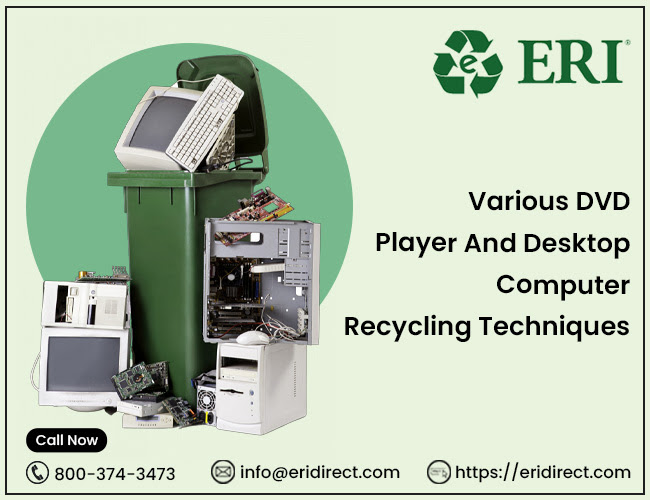
Various DVD Player And Desktop Computer Recycling Techniques

The tech world around us has undoubtedly created a completely new world but more concerns need to be addressed too. The day-to-day generation of new gadgets leads to a lot of wastage of elements and products. Well, there is a solution. Electronic recycling for government is an initiative taken and we need to know about it in a detailed manner.


Let us dive deeper into this blog and learn in detail about E-waste recycling and desktop computer recycling.

What is E-Waste Recycling and What Products Are Recycled in E-Waste?

The e-waste recycling process is the procedure of taking the e-waste into pieces and segregating it between distinctive segments. This includes ferrous metals like copper, and aluminum and non-ferrous metals like glass, and plastics, where the recycled materials are extracted from the scrapped products and used in the manufacture of new products while nondegradable hazardous substances such as lead, cadmium, and mercury are recycled by ways of proper disposal.

Purpose of E-Waste Recycling

For those who also aiming to recycle both the computer monitor and cell phones, it is necessary to inform you that these devices contain some hazardous substances such as lead. Similar to cell phones, the monitors should be disposed of through e-waste facility-accredited recycling firms. Most of the recycling programs have different centers where one can drop off both the cell phones and the computer monitors and have them recycled.


DVD Player Recycling Methods

DVD players are electrical gadgets that may be recycled rather than being dumped in landfills. Here are some methods for DVD player recycling: 


  • Recycling: Some other electronics stores and recycling firms take DVD players for recycling. They will also disassemble the device and reuse the constituent components for the fabrication of new products. Find a recycling center that is close to you that takes electronic waste. 

  • Donation: In case your DVD player is still in working condition, then the best thing you can do is to take it to a charity organization or non-governmental organization of your choice. They either incorporate it in the implementation of their programs or produce it and sell it for the funding of their programs. 

  • Hazardous Materials: DVD players could have such materials as lead or mercury, which are considered dangerous substances. It is recommended not to dispose of them alongside the normal trash as this can cause harm to the environment. This way, recycling or proper disposal of this hazardous material is properly managed and done correctly.

Desktop Computer Recycling

We can’t exclude e-waste recycling in the world of digitalization, where we live in. The recycling of electronics is an extreme environmental threat that contributes to instances of toxic substances being emitted into the atmosphere. Thus, this recycling delivers a hundred percent solution to use the material that has been recovered from mother nature and minimize its unfavorable effects.

Wrapping Up

DVD player recycling, desktop computer recycling, and e-waste recycling are not as easy as tossing the old models of phones in the garbage basket, it really needs effort. It pertains to the assurance of each phase of the procedure. ranging from the last stage of recycling to the absolute disposal of data. Each of them is done with utter professionalism and every stage is managed carefully. You are a virtuous entity as far as the environment is concerned, as you encourage environmentally friendly activities and endorse suitable recycling practices. and the future that will be hence come as an ecological one.

Frequently Asked Questions

1. What can DVDs be recycled into?

Return the CD or DVD with its plastic/card case and paper insert and these will be recycled into new products. return them to a charity shop, or take them to a CD or DVD recycling center, and if they still contain data that is no longer useful, sell them. taken and used them in the garden to repel the birds or in a project involving children to make bright shining articles.


2. How are CDs and DVDs recycled?

According to the electronic recycling for the government, specialized recycling companies will clean, grind, blend, and compound the CDs and DVDs into plastic that can be reused for items such as auto parts, office equipment, and street lights.

Thursday, 28 December 2023

Green Gadgets: A Guide to Responsible Electronic Recycling Practices

In our fast-paced digital age, electronic devices have become an integral part of our lives. However, as we embrace the latest gadgets, it's crucial to consider the environmental impact of electronic waste. This blog is your guide to responsible electronic recycling practices, with a focus on data destruction, local electronic recycling, and the overall importance of electronic recycling.

The Environmental Toll of Electronic Waste

With the rapid evolution of technology, the life cycle of electronic devices is growing shorter, contributing to a surge in electronic waste. From old smartphones to outdated laptops, improperly discarded gadgets can harm the environment and pose risks to human health. Responsible electronic recycling is the key to mitigating these environmental hazards.


1. Data Destruction: Protecting Your Digital Footprint

When parting ways with electronic devices, safeguarding your personal and sensitive data is paramount. Data destruction is a critical aspect of responsible electronic recycling. Before recycling your gadget, ensure that all personal information is securely wiped. Many reputable electronic recycling services offer data destruction as a part of their comprehensive recycling process, giving you peace of mind that your digital footprint is erased.

2. Local Electronic Recycling: Supporting Sustainable Practices

Supporting local electronic recycling initiatives is an excellent way to contribute to sustainable practices. Local electronic recycling not only reduces the carbon footprint associated with transportation but also supports the growth of environmentally conscious businesses in your community. Explore local recycling centers or electronic recycling events to conveniently dispose of your gadgets while promoting sustainable practices at the grassroots level.

Responsible Electronic Recycling Practices

3. Choose Certified Recyclers: Ensuring Environmental Compliance

Opting for certified electronic recyclers is crucial to ensuring that your gadgets are processed in an environmentally compliant manner. Look for certifications such as R2 (Responsible Recycling) or e-Stewards, which signify adherence to strict environmental and ethical standards. Certified recyclers prioritize proper handling, disposal, and recycling of electronic waste.

4. Extended Producer Responsibility (EPR): Holding Manufacturers Accountable

Advocate for extended producer responsibility (EPR) to encourage manufacturers to take responsibility for the end-of-life disposal of their products. EPR programs promote sustainable product design and responsible electronic recycling practices by placing the onus on manufacturers to manage the environmental impact of their devices.

Conclusion

As we strive for a more sustainable future, responsible electronic recycling practices play a crucial role in reducing the environmental footprint of our digital lifestyles. From prioritizing data destruction to actively participating in local electronic recycling initiatives, each individual's efforts contribute to a more sustainable and eco-friendly tech landscape. Embrace green gadgets and be a steward of the environment by incorporating responsible electronic recycling practices into your tech-savvy lifestyle.